Three crustaceans compared: characteristics, cuisine, and sustainability in the Mediterranean
The Mediterranean is home to a wide variety of shellfish that often end up on our tables. Some are native to the basin, while others arrived from afar and adapted over time. Knowing the differences between these species isn’t just useful in the kitchen: it’s a way to make more informed and sustainable choices. In this guide, we compare three popular species: Mediterranean shrimp, oceanic shrimp, and monoceros prawns.
1. Mediterranean prawn: the native species par excellence
Characteristics
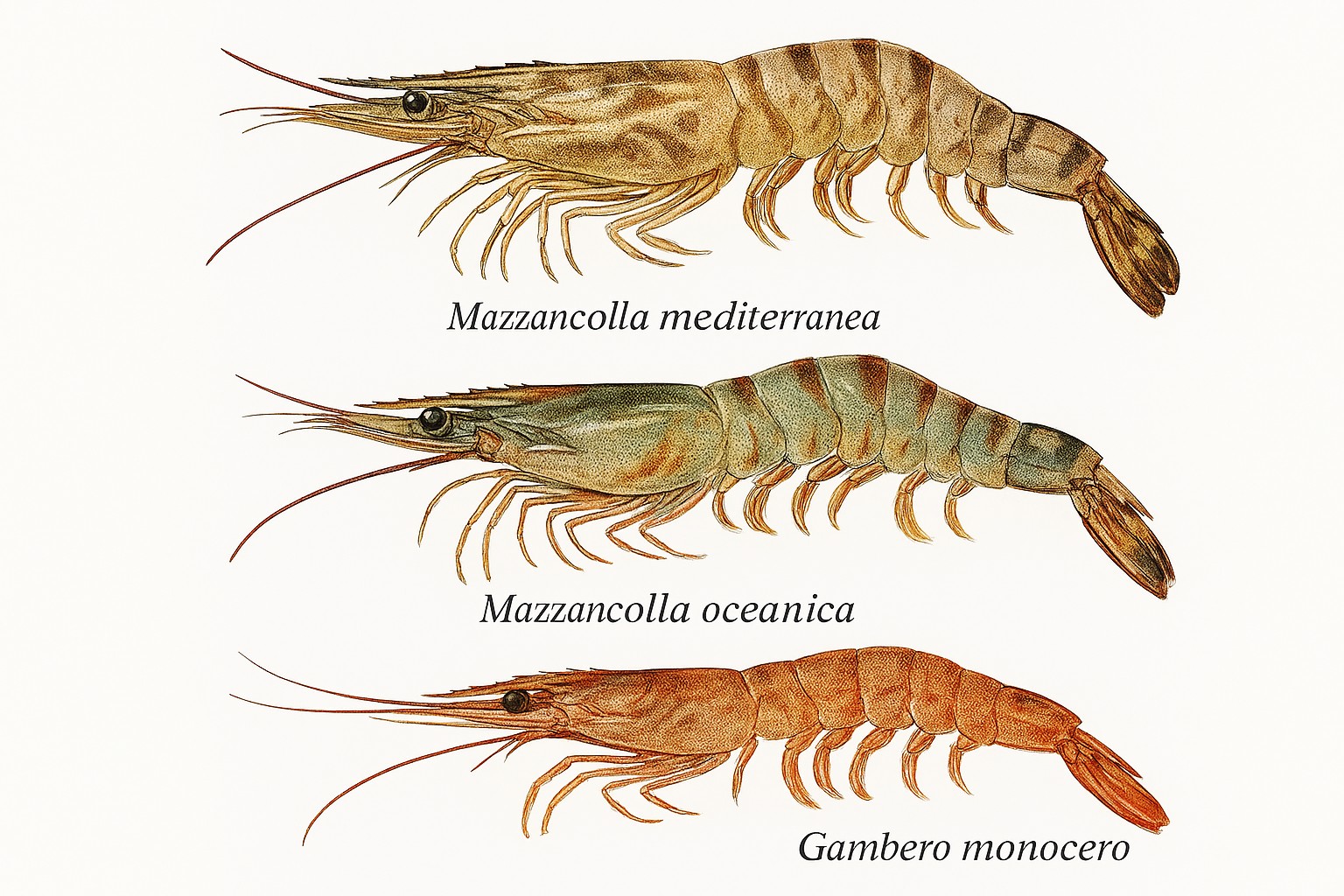
The Mediterranean prawn is a crustacean typical of our seas. It has a slender body, with light shades and reddish-brown streaks that make it instantly recognizable. Its flesh is firm, fragrant, and tends to retain a good consistency when cooked.
Uses in the kitchen
Due to its fine taste, it lends itself perfectly to light preparations, which enhance its delicacy:
● crudités and tartare,
● quick grills,
● gourmet fish dishes with fresh and minimally invasive ingredients.
It is the ideal crustacean when you want to bring the true identity of the Mediterranean to the table.
Sustainability
As a native species, its consumption can be sustainable if sourced from responsible fishing and respected seasonality. Traceability and the FAO zone are two factors to always verify.
2. Oceanic Shrimp: The American Guest That Adapted to the Mediterranean
Characteristics
The oceanic shrimp originates from the Gulf of Mexico and has recently appeared in the Mediterranean. Visually, it closely resembles the local shrimp, but has a more uniform color and slightly softer, less flavorful flesh.
Uses in the kitchen
Its versatility makes it a practical choice in many recipes:
● mixed fried foods,
● quick first courses,
● stir-fried dishes with vegetables or cherry tomatoes.
The more neutral flavor makes it suitable for palates seeking a delicate taste.
Sustainability
Since it’s not a native Mediterranean species, its impact depends on how it’s caught or farmed. In some cases, its presence even helps reduce pressure on local shrimp, provided the supply chain is carefully monitored.
3. Monoceros shrimp: the traveler of the Indo-Pacific
Characteristics
Native to the Indo-Pacific, the monocerus shrimp has found a favorable environment for its spread in the Mediterranean. It is more robust than the prawns and has a grayish-brown hue. Its distinctive feature is its shorter beak, topped by a single “tooth.”
Uses in the kitchen
It is a crustacean with a full flavour, ideal for structured recipes:
● fish soups,
● seafood risottos,
● spicy or Asian-inspired dishes.
Meat tends to absorb seasonings and marinades well.
Sustainability
As a non-native species, its presence in the Mediterranean is monitored. In some areas, fishing for the monoceros is seen as a useful ecological containment measure, making it an attractive option even for those who prioritize sustainability.
How to choose? A question of taste, provenance, and responsibility.
Each species has unique qualities:
● the Mediterranean prawn is the most prized and distinctive,
● the oceanic prawn is practical, versatile and convenient,
● the single-headed prawn offers body and intensity in the richest preparations.
To make an informed choice, it’s essential to always read the label, the commercial name, and the catch location. Knowing the source is the first step to bringing not only good, but also sustainable fish to the table.
Contact us on www.ammaruni.com or write to info@uenosrl.com .